Figures and Encounters: The Threshold Between Worlds
Figurative painting is sometimes spoken of as though it were simply the opposite of abstraction — painting that includes recognizable human forms. But figure painting, when practiced with depth, is something far more radical. It is the attempt to render presence: the weight of a body, the charge of a gaze, the tension of two beings meeting at a threshold.
What the Figure Carries
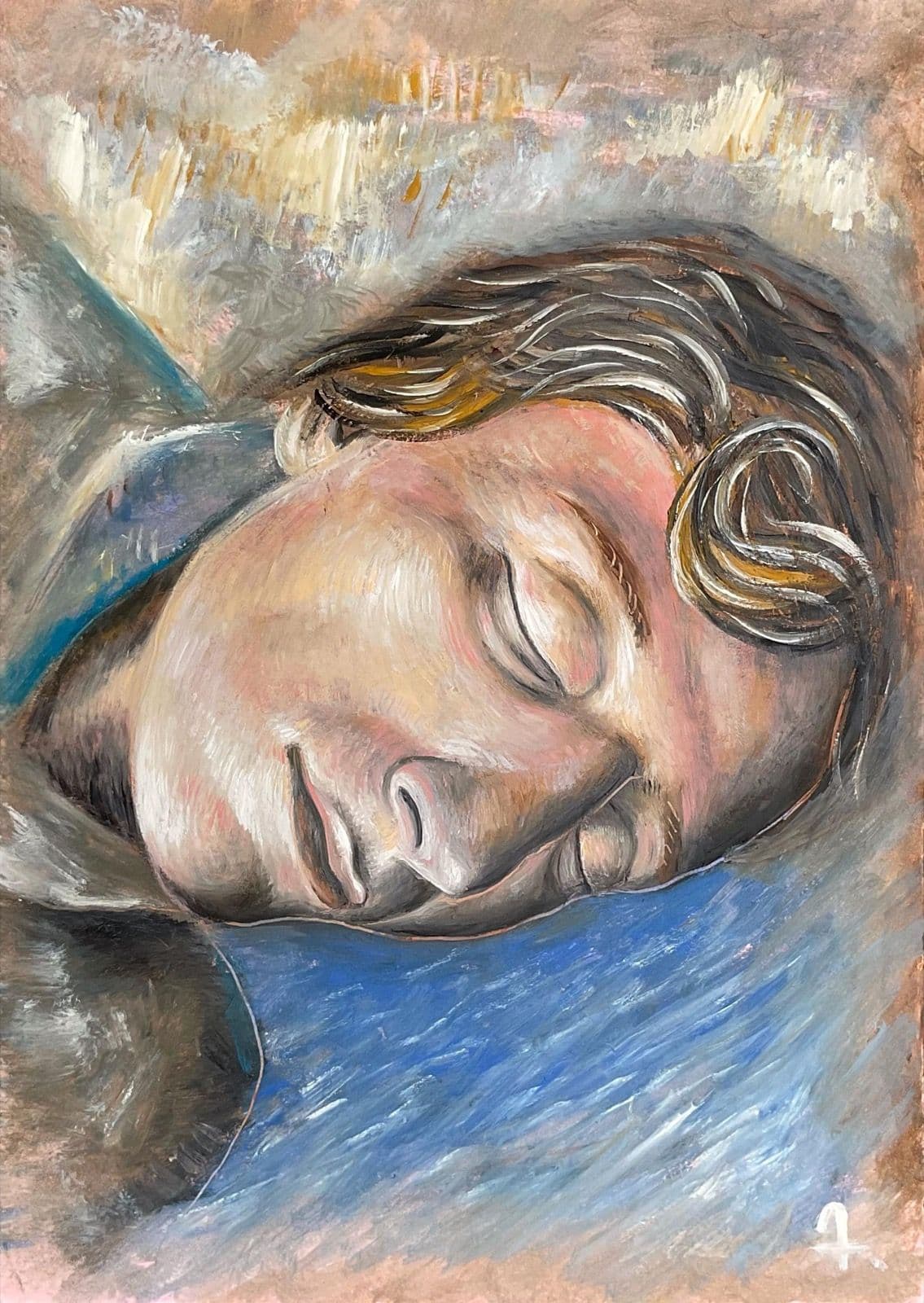
In my Figures & Encounters series, the human figure is never alone. A girl stands between wild cats. A child meets a wolf. A sleeping face fills the canvas with the vulnerability of unconsciousness. These are not portraits in the traditional sense. They are thresholds — moments in which the boundary between the human and the non-human, the waking and the dreaming, briefly dissolves.
Contemporary figurative art, at its strongest, carries something that abstraction cannot: the shock of recognition. When you see a figure in a painting, your own body responds. You feel the weight, the posture, the exposure. This is why figurative painting has survived every attempt to declare it obsolete. The figure is irreducible.
The Encounter as Form
Many of my strongest works are structured around encounters — meetings between beings who do not belong to the same world. Brave Girl, standing between the panther and the cat, is not threatened. She mediates. Emotional Delicacy, the child beside the wolf, is an image of shared vulnerability rather than danger. These encounters are the fundamental grammar of my figure painting.
What interests me is the moment just before or just after something happens. Not narrative action, but the charged stillness of two presences facing each other. The painting holds that moment open, suspends it, lets the viewer inhabit it without rushing toward resolution.
Figurative Painting Today
We are living through a remarkable return to figurative painting in contemporary art. After decades in which the figure was treated as naive or reactionary, painters around the world are rediscovering what the old masters always knew: that the human form, rendered with sufficient skill and vision, is the most powerful image available to us. My contribution to this conversation is not nostalgic. It is cosmological — the figure as a being in a mythic space, not merely a body in a room.