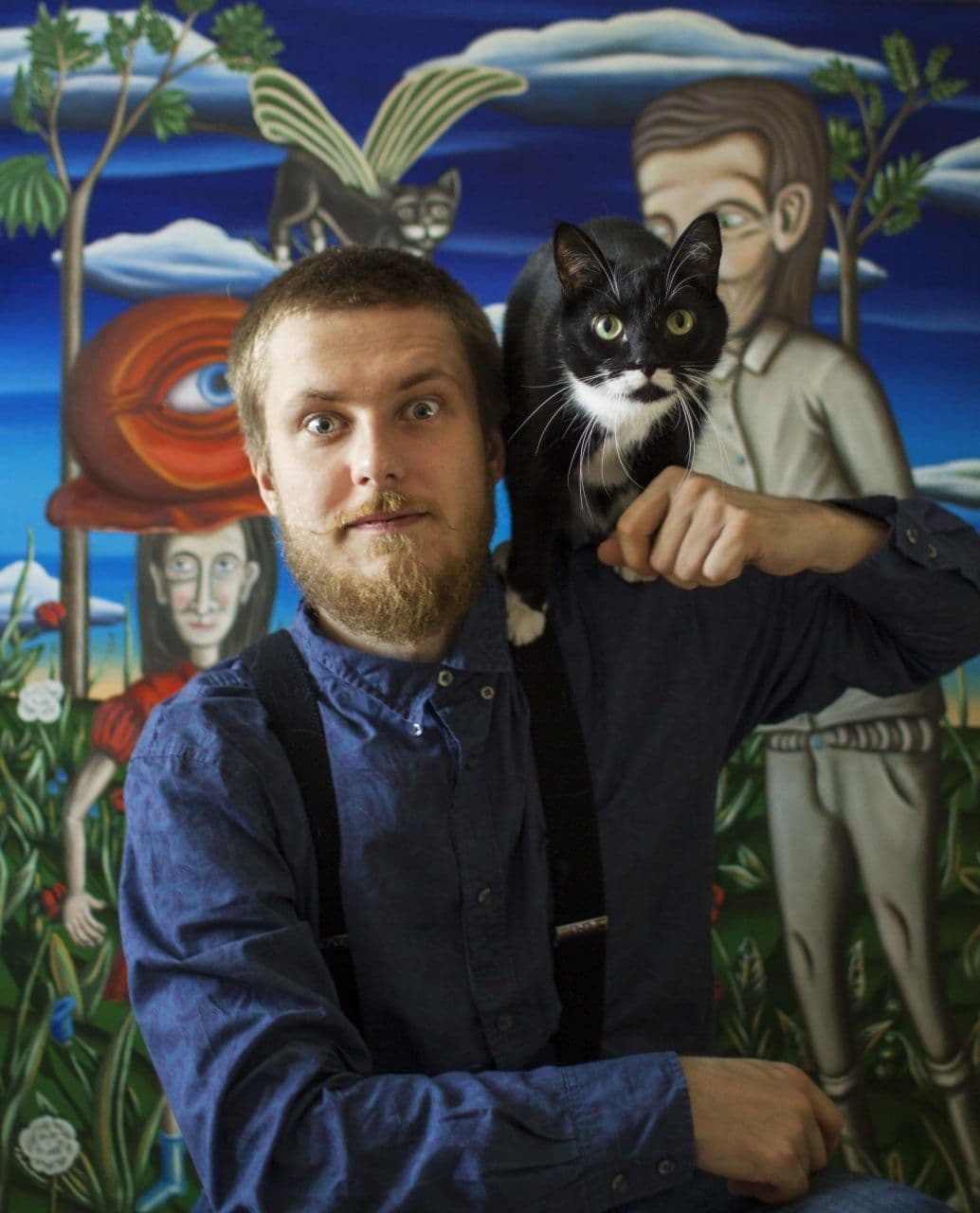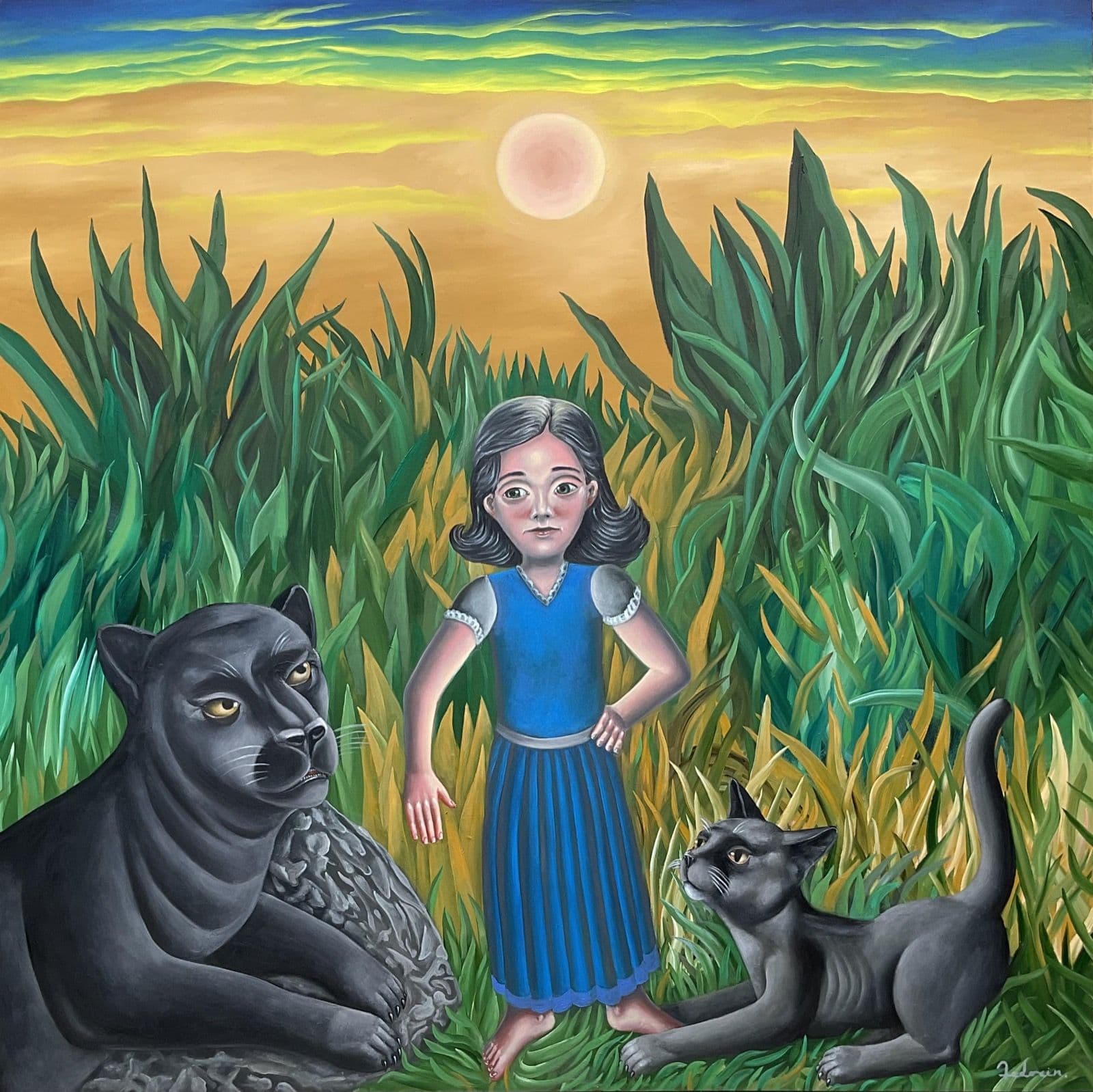
Painting as an Inner Cosmology
A painting does not begin with the desire to show something. It begins with the sense that something exists which has not yet been made visible. Not a story, not a message, not a mood — but a structure: a world that contains its own logic, its own time, its own creatures.
For as long as I can remember, I have painted not what I see, but what I know to be there — behind the surface of things, behind the comfortable arrangements of the everyday. This is not mysticism in any formal sense. It is simply the acknowledgment that images carry knowledge that words do not.
Cosmogony, Not Illustration
The word "cosmogony" describes the birth of a world. In my work, each painting is a cosmogonic act — not because it creates something from nothing, but because it establishes a space in which figures, beasts, guardians, and encounters can exist according to their own internal necessity.
This is fundamentally different from illustration. An illustrator translates a pre-existing text into visual form. What I attempt is closer to the opposite: to create the image first, and to let meaning emerge from its structure, its tensions, its silences.
The Painting Looks Back
I am interested in paintings that resist quick consumption. Not out of obscurity, but out of density. A work that has been truly built — not merely executed — will continue to shift in the viewer's perception over time. It will look different in the morning than at night, different after a year than after a day.
This is what I mean by inner cosmology: the painting does not end at its edges. It generates an atmosphere, a gravity, a set of relations that extend beyond the canvas into the viewer's own inner space.
Building, Not Expressing
My practice is closer to architecture than to self-expression. Each element in a composition — a figure's gaze, the tilt of a horn, the weight of a shadow — holds a specific position within a system of forces. The image is constructed, not poured out.
This does not mean the paintings lack emotion. On the contrary: the emotion arises precisely from structure. It is the tension between order and disturbance, between the sacred and the animal, between stillness and the pressure to move, that gives these works their charge.