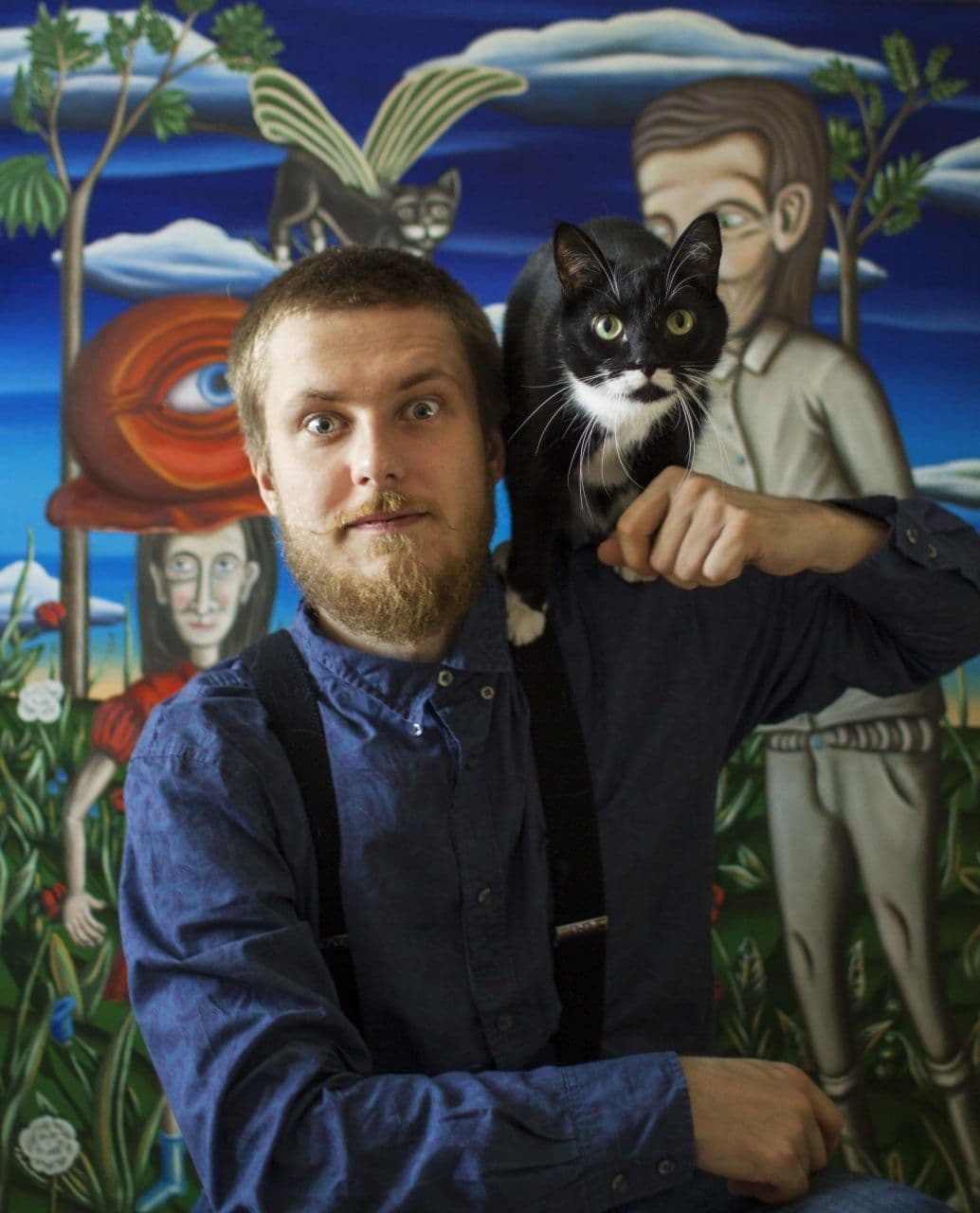
From Moscow to Buenos Aires: An Artist's Migration
Every artist carries the geography of their early vision. For me, that geography was dual from the start: the low ceilings and gold-leaf interiors of Russian churches, and the vast, horizontal light of a country I had not yet reached but somehow already felt.
I left Russia not in flight but in pursuit — of a light I had only seen in paintings, of a physical space large enough to contain the worlds I wanted to build. Buenos Aires was not a destination I chose rationally. It chose me, the way certain images choose you: by arriving before you have a name for them.
The Russian Foundation
Moscow gave me structure. The Tretyakov Gallery, the icons at Andrei Rublev Museum, the cosmonautics museum, the Constructivists, the heavy oil paintings of the Wanderers — all of this formed a visual foundation that is still active in everything I make.
The Russian tradition taught me that painting could be an act of building, not merely of describing. An icon is not a picture of a saint; it is a structure through which the saint becomes present. This understanding has never left me, even as my subjects have moved far from Orthodox imagery.
Buenos Aires: Light and Color
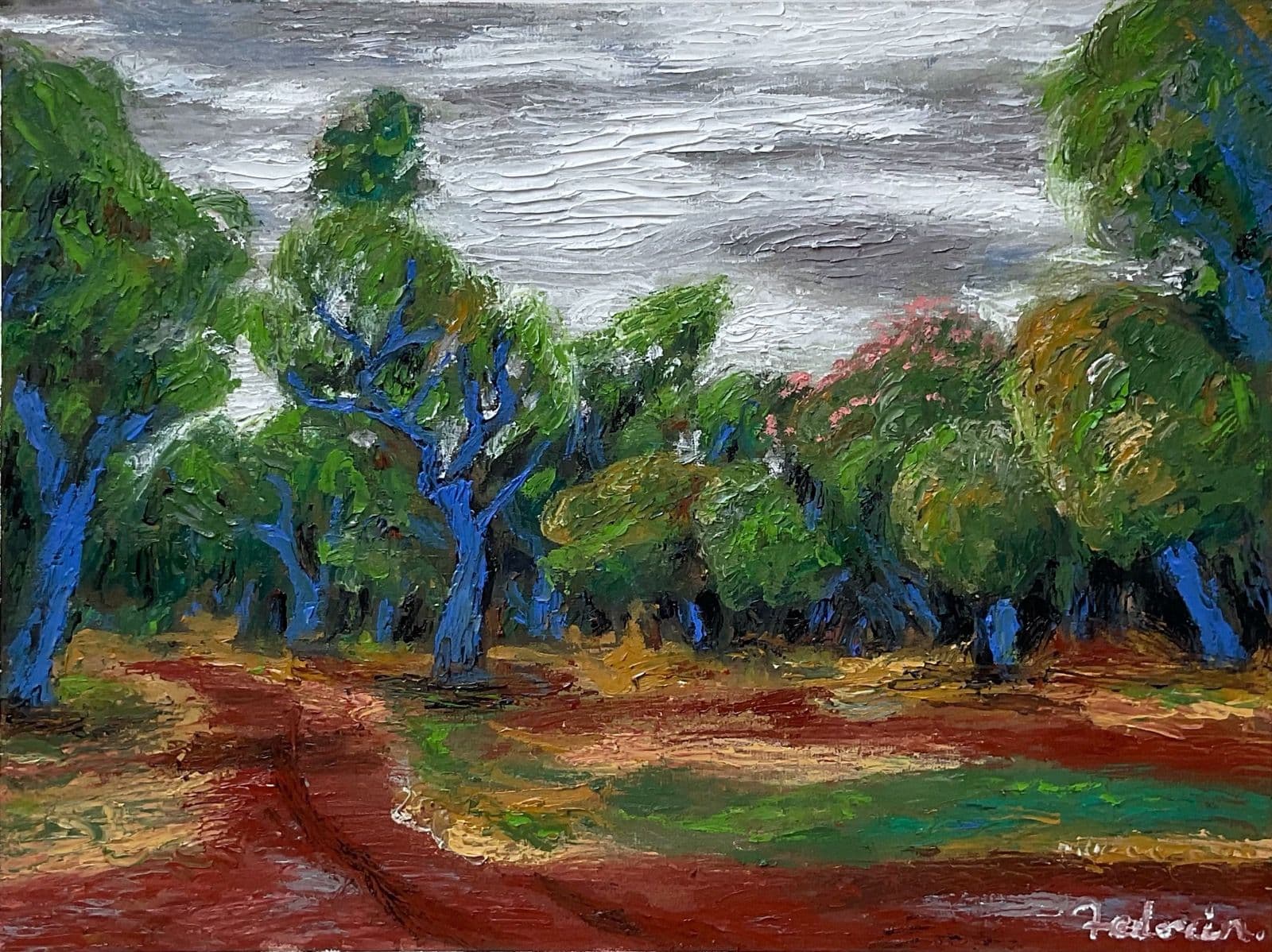
Argentina gave me color. The light here is different — horizontal, warm, relentless. The parks are not the pale greens of the north but deep, saturated, almost tropical. The earth is red. The sea is grey-green and physical.
My Buenos Aires landscapes — Plaza Sicilia, Playa Reserva — are attempts to record this shock of color without reducing it to postcard prettiness. The impasto is thick because the light itself feels thick. The blue tree trunks are blue because that is what I see when I look without preconception.
Continuity Between Worlds
What surprises me most, looking back across two decades of work, is how much the two geographies share. Russian icons and Buenos Aires sunsets both operate through saturation — of color, of presence, of structure. Both refuse the cool detachment of northern European painting.
My studio in Buenos Aires is full of Russian art books and Argentine light. The sacred figures I paint could not have been born in either place alone. They needed both: the weight of one tradition and the freedom of another. The migration was not a break. It was a completion.